Over 640 Customer Reviews
Home
Blog
Single Post

5 Tips to Extend the Life of Your Tires

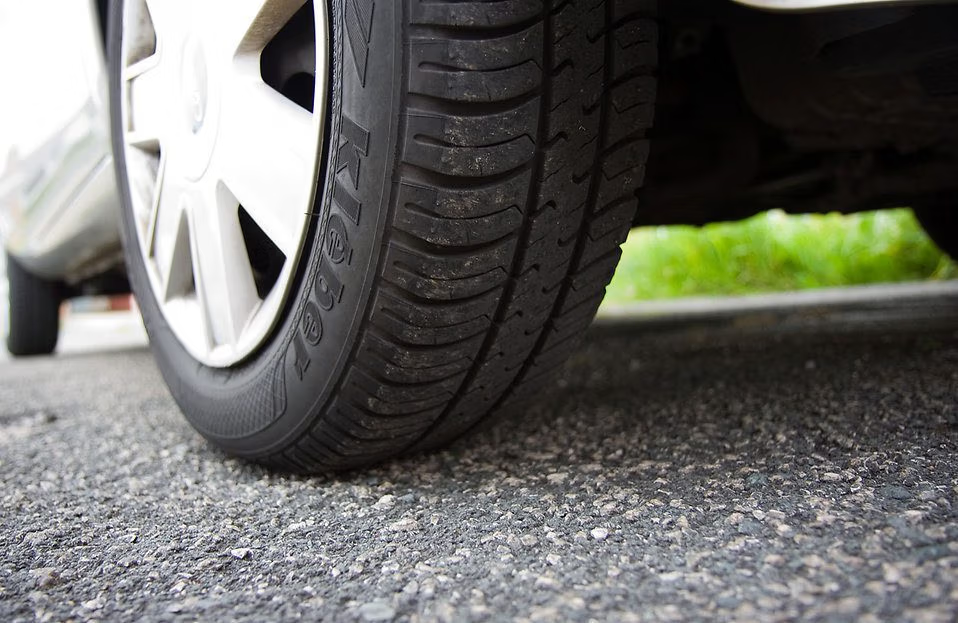
Close-up of a car tire on a vehicle in Hamilton auto service context
There is no definite answer to the age-old mystery of how long should your tires last.Note: If you need consultation regarding buying new car tires in Hamilton, visit our auto service shop. Our licensed and experienced mechanics can help.It depends on a number of factors, some of which are completely out of your control (such as weather conditions). They can wear out after a couple of years or after 20-30 thousand kilometers, but they can also live and function properly for many years, or even a whole decade. Driving speeds up their aging process, but passivity does the same.They are hardly a cheap investment, but when their last breathing moment comes, there’s no alternative but to replace them. Good tires are essential for your car’s proper functioning and your own safety on the road.However, there are things you can do to postpone tire replacement as much as possible. Today we give you 5 tips to prolong the lifespan of your pet’s rubber legs.1) Pressure needs to be checked regularlyThis is a must-do activity at least once a month. Regardless of the schedule, you should also check tire pressure each time you plan to undertake a longer trip. A lot of people don’t do this because they rely on their TPMS dashboard light, which will warn them only if the pressure is under 75% – which is way too low.But even a brand new tire will deflate a little every month. If you don’t react, it will make your car difficult to control, affect your fuel economy and make every ride a dangerous adventure. Whether they are flat or overinflated, the risk is there and you need to address it.Most tires require a pressure of 60 PSI, but this is not a universal measure. To make sure which pressure is recommended for your tires, check your car’s owner pocketbook.While hanging around the tires, take a few minutes to inspect them. Unfortunately, roads are frequently inhabited by jackstones, little rocks or nails, and some of them can end up in your tires, causing punctures. You can repair some of the punctures yourself, but it’s always best to visit a trained technician.2) Tires need rotatingCars can be front-wheel, rear-wheel, or all-wheel drive vehicles. The type of the car you choose to buy will determine the traction, handling, behavior in different weather conditions, and many other things.But guess who suffers most because of the downsides of all three respectively? The tires, of course. They have to bear all the pressure.This pressure is uneven. In front-wheel-drive cars, front tires are going to wear faster than rear tires. Conversely, rear tires are the ones that will make a greater effort if you own a rear-wheel drive car. Even in an all-wheel-drive vehicle, the tires won’t suffer exactly the same amount of stress in touch with the ground.That’s why it’s best to have them rotated every 8.000 kilometers.3) Wheels need alignmentIf you feel vibration or trembling when steering, or the car drifts to one side, it’s time to get your wheels aligned. Thanks to many encounters with potholes and curbs, they can get displaced out of their normal, parallel position. If your steering wheel isn’t centered, this is yet another sign your wheels are in urgent need of proper alignment.But you shouldn’t wait until it starts to show. Smaller misalignments can often pass unnoticed, and it’s your tires that will eventually pay the price.So, this is just another part of regular car maintenance that should be done twice a year. It doesn’t cost much and it saves you money in the long run.4) Adjust your driving styleFast driving may be fun, but it doesn’t go hand in hand with your tires’ health and good shape. Fast steering, hard braking, aggressive acceleration or hitting curbs are not a good muscle exercise for the tires. These practices force them to undergo even more stress than usual and deteriorate at a faster pace.It’s great if you have a powerful sports car that simply calls for flooring the gas pedal, but try not to do it often. Tires like to be treated as gently as possible. Having to face the ground and fight bumps and potholes is trouble enough for them. You don’t have to add to that trouble. At least if you want them to last.5) Rubber hates sunBald tires can make for a lousy driving experience, but there’s something equally bad: cracks scattered on the sidewalls like wrinkles on a very old person’s face.This condition is usually associated with natural decay because of aging. But years of experience are not the only reason for this. It can also happen because of frequent exposure to heat and sun, whose UV rays aren’t vicious for humans only.Store your car in a garage. If you don’t have one, grow a habit of parking it in shady places and you’ll do your tires (and your wallet) a service.If you need help with your tires, we can get you set up and ready to go! Come to our repair shop in Hamilton today!We are located only 4 min walking South West of Tim Hortons Field and 4 min walk West of Bernie Morelli Recreation Centre.

Frequently Asked Questions

How often should I check my tire pressure?

Check tire pressure at least once a month and before any long trip. Tires naturally lose a small amount of air over time, and underinflation or overinflation can affect handling, fuel economy and tire wear. Use the vehicle manufacturer’s recommended pressure (found in the owner’s manual or door jamb placard) rather than a generic PSI value.

How frequently should I rotate my tires?

Rotate tires regularly to promote even wear—typically every 8,000 kilometers or as recommended by your vehicle manufacturer. Rotation patterns depend on drive type (front-, rear- or all-wheel drive), and regular rotation helps extend tire life and maintain balanced handling.

What are the signs that my wheels need alignment?

Common signs include the vehicle drifting to one side, a steering wheel that isn’t centered, or vibration/trembling when steering. Misalignment can result from impacts with potholes or curbs; having alignment checked about twice a year or when symptoms appear helps prevent uneven tire wear.

How does driving style affect tire lifespan?

Aggressive driving—hard braking, rapid acceleration, fast cornering and frequent curb impacts—increases tire stress and accelerates wear. Smoother acceleration and braking, avoiding curb strikes and reducing high-speed cornering will reduce tire wear and help them last longer.

How can I protect my tires from sun and heat damage?

Prolonged UV and heat exposure can cause sidewall cracking and premature aging. Park in a garage or shaded area when possible, use covered parking or rotate parking locations to limit continuous sun exposure. Regular inspections for cracks or dry rot let you address issues early.

CRS Automotive

Since 2005, we have built a reputation for delivering exceptional automotive repair services and outstanding customer care. Our commitment to excellence and dedication to our clients have made us a trusted name in automotive care. Our team of licensed technicians is experienced in working on all makes and models, including electric vehicles (EVs) and hybrids. Our comprehensive range of services ensures that your vehicle remains in top condition, covering all aspects of automotive repair and maintenance. When you choose CRS Automotive, you’re choosing a team that genuinely cares about you and your vehicle.

Contact