For many Hamilton drivers, winter tire season begins with the first cold morning, the first frost warning or the first reminder from a neighbour who already booked their tire change. But the best time to switch to winter tires is not when the first snowstorm arrives.
It is usually earlier than that.
Winter tires are designed for cold-weather traction, not just deep snow. Once temperatures regularly drop near 7°C, all-season and summer tires can begin to lose flexibility and grip. That means your vehicle may not stop, turn or respond as well, even when the road looks clear.
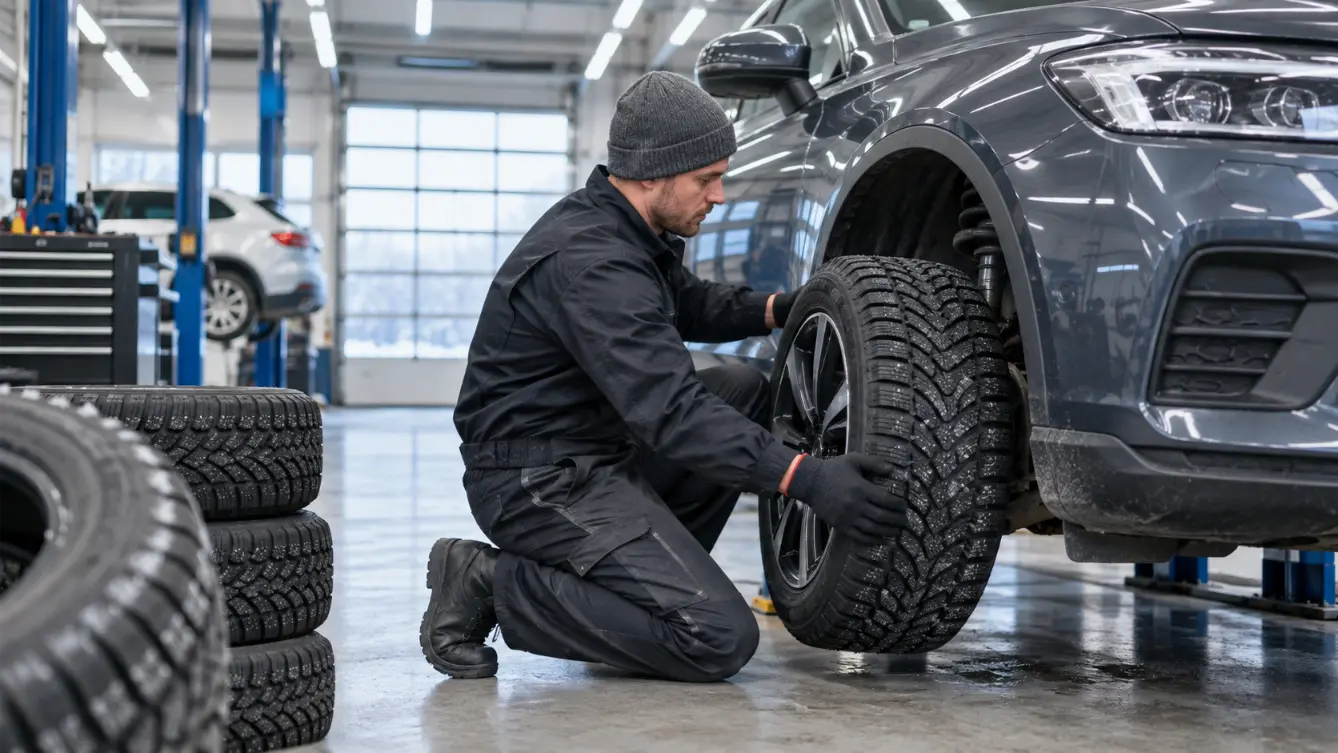
If you are planning your seasonal changeover, CRS Automotive provides winter tire service in Hamilton for drivers who want their tires installed, checked, balanced or inspected before winter driving conditions arrive.
Here is how to decide when to switch, what to check before installation and why waiting for the first snowfall can make things harder.
Table of Contents
The Best Time to Install Winter Tires in Hamilton
The best time to install winter tires is when daytime temperatures are consistently around 7°C or lower.
That does not mean you need snow on the ground. The 7°C point matters because tire rubber responds differently as temperatures drop. Winter tires are made with rubber compounds designed to stay more flexible in colder conditions, while many all-season and summer tires become firmer as the weather gets colder.
For Hamilton drivers, this often means booking the seasonal tire change in the fall before the first major winter rush.
A practical timing window is usually:
- late October;
- early November;
- before regular overnight frost;
- before the first major snow forecast;
- before holiday travel or longer winter drives.
Every year is different, so the exact date should depend on the weather, not only the calendar. If the forecast shows several days near or below 7°C, it is time to start planning.
Transport Canada notes that below 7°C, all-season and summer tires begin to lose elasticity, which can reduce traction. Ontario also advises drivers to install four winter tires and avoid mixing different tire types on one vehicle. You can review Ontario’s winter driving guidance here: Ontario winter driving tips.
Why Temperature Matters More Than Snowfall
Many drivers wait until the first snowfall before installing winter tires. The problem is that cold pavement can reduce traction before the snow arrives.
Winter tires help with more than driving through snow. They are designed to improve grip in:
- cold temperatures;
- frost;
- slush;
- icy patches;
- wet winter roads;
- packed snow;
- freeze-thaw conditions.
Hamilton weather can change quickly in the fall and early winter. A mild afternoon can be followed by a cold evening, frost overnight and slick roads in the morning.
That is why temperature is usually a better guide than snowfall. If the roads are cold enough, your tires need to perform in winter-like conditions even if the pavement looks dry.
Waiting too long can also create scheduling problems. Once the first snow is in the forecast, tire shops often get very busy. Booking early helps you avoid the rush and gives you time to deal with any issues found during the changeover.
All-Season Tires vs. Winter Tires: What Is the Difference?
All-season tires are designed to perform reasonably well in a range of conditions. They can be useful for mild weather, rain and light seasonal changes. However, “all-season” does not mean they perform equally well in every Canadian winter condition.
Winter tires are built specifically for cold-weather driving.
They usually have:
- softer rubber compounds for colder temperatures;
- deeper tread patterns;
- more biting edges;
- sipes that help grip snow and ice;
- tread designs that help move slush and water away.
The difference becomes more important when roads are cold, wet, icy or covered in snow.
What about all-weather tires?
All-weather tires are different from regular all-season tires. Some all-weather tires carry the three-peak mountain snowflake symbol, which means they meet a winter traction standard.
They may be a good option for some drivers, depending on the vehicle, driving habits and winter conditions. However, dedicated winter tires are still often the better choice for drivers who want stronger cold-weather performance.
If you are unsure what is currently installed on your vehicle, have the tires checked during a seasonal tire service. A technician can confirm the tire type, size, tread condition, age and whether the tires are suitable for winter driving.
How Hamilton Winter Roads Affect Tire Performance
Hamilton drivers can face a mix of winter driving conditions, including city traffic, hills, slush, road salt, potholes and changing temperatures.
These conditions can affect how your tires perform and wear.
Stop-and-go city traffic
Frequent stops and starts require reliable traction. Winter tires can help the vehicle respond more predictably when roads are cold, wet or slippery.
Hills and escarpment routes
Climbing, descending and braking on grades can place extra demand on tires and brakes. Good winter traction matters when driving on cold pavement, snow or icy patches.
Freeze-thaw cycles
Hamilton can experience periods where snow melts during the day and refreezes overnight. This can create slick areas in the morning, especially on bridges, shaded roads, side streets and parking lots.
Road salt and winter debris
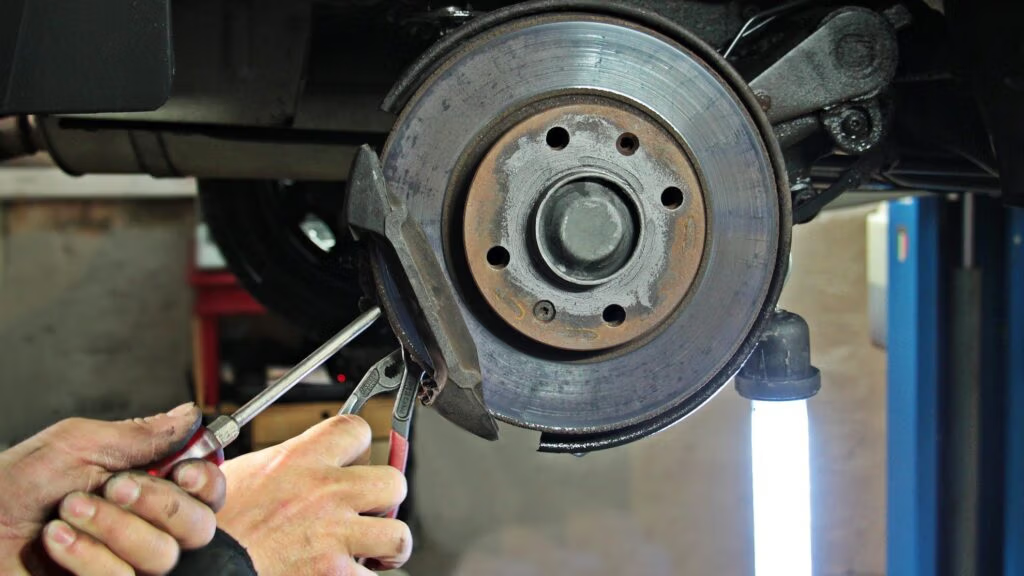
Winter roads can expose tires and wheels to salt, slush, ice chunks and debris. Seasonal tire service is a good time to inspect not only the tires, but also the wheels, valve stems and visible brake components.
Potholes and uneven roads
Winter and early spring potholes can affect tires, wheels, alignment and suspension. If you notice vibration, pulling or uneven tire wear after winter driving, CRS Automotive can also inspect related issues through suspension service in Hamilton.
Can You Wait Until the First Snowfall?
You can wait, but it is not the best approach.
By the time snow appears in the forecast, many other drivers are also trying to book tire appointments. This can make it harder to get the time you want.
Waiting for snow can also leave you driving on tires that are not ideal for cold roads. Even if there is no visible snow, low temperatures can still reduce grip.
A better approach is to watch the forecast and book before:
- temperatures stay near 7°C or lower;
- regular morning frost begins;
- snow is expected;
- holiday travel starts;
- your schedule becomes busy;
- your existing tires show wear or pressure loss.
If you store winter tires at home, check them before booking the appointment. If they look worn, cracked or damaged, you may need time to replace them before installation.
What to Check Before Reinstalling Stored Winter Tires
Before old winter tires are installed again, they should be inspected.
Do not assume that a tire is safe just because it was fine last season. Tires can age, lose pressure, develop damage or wear unevenly.
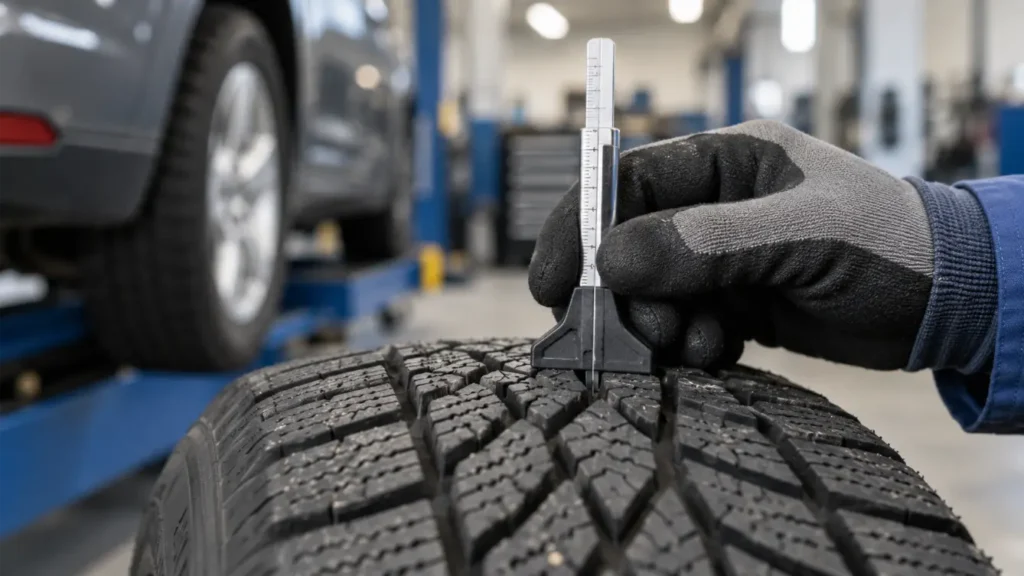
Before reinstalling winter tires, check:
- tread depth;
- cracks in the sidewall;
- bulges;
- punctures;
- uneven wear;
- exposed cords;
- rim damage;
- valve stems;
- tire age;
- missing or damaged wheel hardware.
Tread depth
Winter tires need enough tread to move snow, slush and water away from the contact patch. If tread is too low, winter performance can be reduced.
Sidewall condition
Cracks, bulges or cuts can indicate damage or age-related deterioration. These issues should be inspected before the tire is used.
Tire age
Even if tread remains, older tires may not perform the same way as newer ones. The tire’s manufacturing date is shown in the DOT code on the sidewall.
Uneven wear
Uneven wear may suggest an alignment, suspension, inflation or rotation issue. If the same tire position keeps wearing faster, the vehicle should be inspected.
If you are unsure whether your stored tires are still safe to use, book a tire inspection in Hamilton before winter conditions arrive.
Should You Rotate or Balance Tires During the Seasonal Change?
Yes, this is often a good time to rotate and balance tires, depending on the tire set and vehicle.
Tire rotation
Rotation helps promote more even wear. Because front and rear tires can wear differently, rotating them at the correct intervals can extend tire life and support more predictable handling.
Some vehicles have specific rotation patterns. Directional tires, staggered tire sizes and certain AWD systems may require special handling, so always follow the vehicle and tire manufacturer’s recommendations.
Tire balancing
Balancing helps prevent vibration caused by uneven weight distribution in the tire and wheel assembly.
A tire may need balancing if you notice:
- steering wheel vibration;
- seat or floor vibration;
- vibration at highway speeds;
- uneven tire wear;
- shaking after a seasonal change;
- vibration that was not present before.
Balancing is especially important before winter because vibration can affect comfort, handling and wear over time.
CRS Automotive provides tire installation, rotation and balancing as part of its tire services for Hamilton drivers.
Should You Install Winter Tires on All Four Wheels?
Yes. Install winter tires as a full set of four.
Using only two winter tires can create uneven traction between the front and rear of the vehicle. This can affect handling, braking and stability, especially during emergency manoeuvres or on slippery roads.
Ontario’s winter driving guidance also recommends installing four winter tires and not mixing different tire types on one vehicle.
This applies to:
- front-wheel-drive vehicles;
- rear-wheel-drive vehicles;
- all-wheel-drive vehicles;
- SUVs;
- vans;
- light-duty trucks;
- many hybrids and EVs.
All-wheel drive can help with acceleration, but it does not replace the need for proper tires. AWD does not shorten stopping distance on its own. Your tires still determine how much grip the vehicle has when braking and turning.
Do Winter Tires Help With Insurance Discounts in Ontario?
Many Ontario drivers may qualify for a winter tire insurance discount.
The Financial Services Regulatory Authority of Ontario says all auto insurance companies in Ontario must offer a discount if winter tires are installed on the vehicle. You can read FSRA’s guidance here: How to save on auto insurance.
Each insurer may have its own conditions, such as:
- when the tires must be installed;
- whether all four tires are required;
- proof of installation;
- the required winter tire symbol;
- the months the tires must remain on the vehicle.
Check with your insurance provider before assuming you qualify. If proof of installation is needed, ask what type of documentation they accept.
What About Winter Tire Pressure?
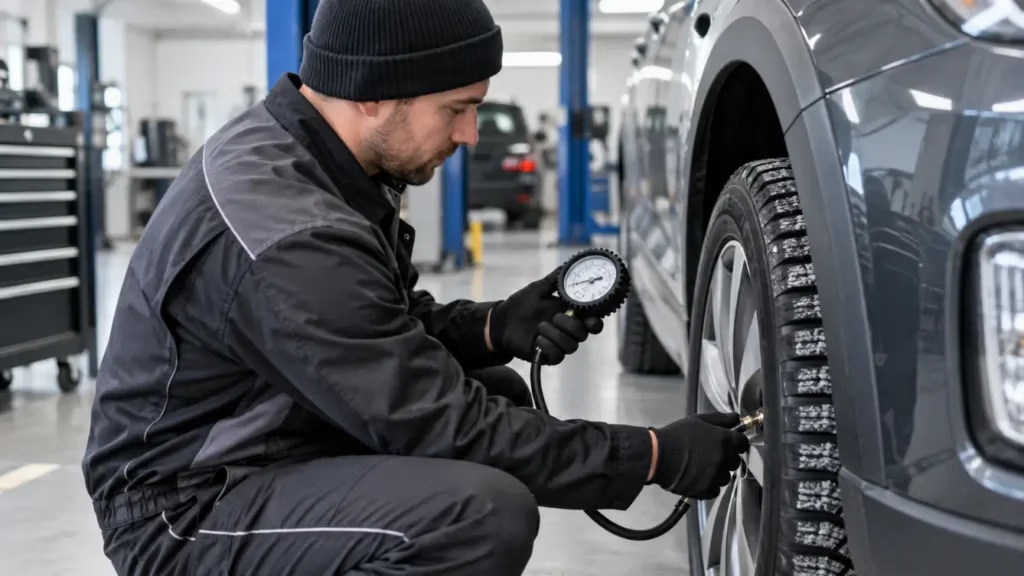
Tire pressure can drop as temperatures fall. A tire that was properly inflated in warmer weather may become underinflated once colder weather arrives.
Underinflated tires can affect:
- handling;
- braking;
- fuel economy;
- tire wear;
- steering response;
- tire temperature;
- overall safety.
Check tire pressure when the tires are cold and follow the pressure listed on the vehicle’s tire placard, not the number printed on the tire sidewall. The sidewall number is usually the maximum pressure, not the recommended operating pressure for your vehicle.
Transport Canada notes that tire pressure changes as air temperature changes and recommends checking tires regularly. You can review its tire-pressure guidance here: Riding on Air.
Seasonal changeover is a good time to confirm that all four tires are inflated correctly.
Should Winter Tires Be Installed Before a Long Drive?
Yes. If you are planning a long drive during late fall or winter, install the right tires before leaving.
This is especially important if your route may involve:
- early morning driving;
- rural roads;
- highways;
- lake-effect snow;
- steep grades;
- cottage roads;
- trips outside Hamilton;
- holiday traffic;
- changing weather.
Before a winter road trip, it is also a good idea to check fluids, brakes, battery, lights, wipers and emergency supplies. CRS Automotive can help with broader vehicle maintenance service in Hamilton before seasonal travel.
If you are preparing for a longer drive, you can also review our guide on what maintenance to do before a long drive from Hamilton.
When Should You Take Winter Tires Off?
Winter tires should usually come off when temperatures are consistently above 7°C.
Keeping winter tires on too long in warm weather can cause faster wear and less responsive handling. Winter tires are made for cold conditions, so they are not ideal for hot pavement.
In Hamilton, many drivers switch back to all-season or summer tires in the spring once temperatures remain consistently warmer.
Do not remove them too early, though. Spring weather can be unpredictable, and late cold snaps can still happen.
A good rule is to use the same temperature-based thinking in reverse: when the weather is consistently above 7°C, it is time to plan the spring changeover.
Book Winter Tire Service in Hamilton
Do not wait until the first snowstorm to think about winter tires.
If temperatures are regularly approaching 7°C, it is time to plan your seasonal tire change. Booking early helps you avoid the rush, gives you time to inspect stored tires and helps ensure your vehicle is ready before winter driving conditions arrive.
CRS Automotive provides winter tire service in Hamilton, including tire installation, rotation, balancing, inspection and seasonal tire support.
You can contact CRS Automotive to book tire service or ask about your vehicle’s winter tire needs.
The CRS Automotive service centre is located at 999 King Street East in Hamilton.
Frequently Asked Questions
When should I switch to winter tires in Hamilton?
Switch to winter tires when temperatures are consistently around 7°C or lower. You do not need to wait for snow. Cold pavement alone can reduce the performance of all-season and summer tires.
Is October too early to install winter tires?
October is not necessarily too early if temperatures are consistently dropping near 7°C. The correct timing depends on the forecast, your driving habits and whether you want to avoid the first-snow appointment rush.
Do I need four winter tires, or are two enough?
You should install winter tires as a full set of four. Mixing tire types can create uneven traction and affect handling, braking and stability.
Do winter tires help if I have all-wheel drive?
Yes. All-wheel drive can help the vehicle accelerate, but winter tires help with traction when braking, turning and driving on cold or slippery roads. AWD does not replace proper winter tires.
Can I use winter tires all year?
It is not recommended. Winter tires are designed for cold conditions. In warm weather, they can wear faster and may not handle as well as tires designed for warmer temperatures.