
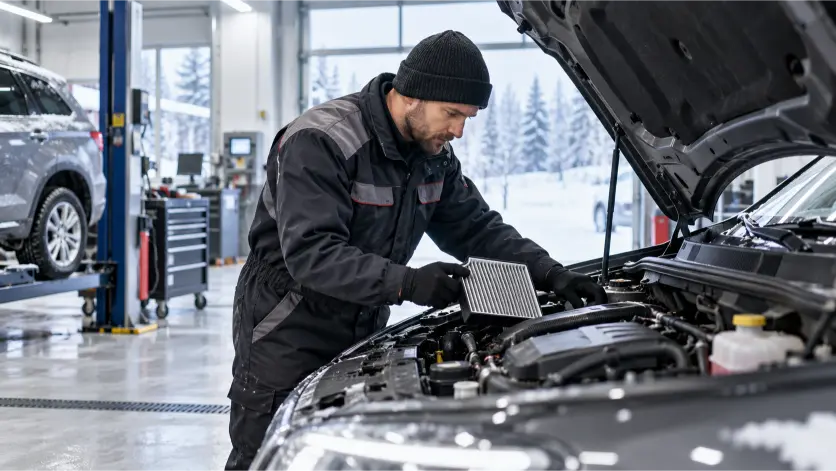
Table of Contents
A car heater that does not work properly is more than an inconvenience during a Hamilton winter. Weak heat, cold air from the vents or poor defrost performance can make the drive uncomfortable, but it can also affect visibility and safety.
If your heater takes too long to warm up, only works while driving, blows cold air at idle or cannot clear foggy windows, something in the heating or cooling system may need attention.
The problem could be as simple as a low coolant level or clogged cabin air filter. It could also involve the thermostat, heater core, blower motor, blend door, actuator or a cooling-system issue.
If your vehicle is blowing cold air or struggling to keep the cabin warm, professional A/C and heating service in Hamilton can help identify the cause before winter driving becomes more difficult.
Here are the most common reasons a car heater may not work properly in winter.
Why a Working Car Heater Matters in Winter
Most drivers think of the heater as a comfort feature, but it also plays an important role in winter visibility.
Your vehicle’s heating and ventilation system helps:
- warm the cabin;
- clear fog from the windshield;
- support the front defroster;
- help remove moisture from cabin air;
- keep passengers comfortable;
- prevent cold-weather driving from becoming distracting.
If the heater is weak, the windshield may stay foggy longer than it should. That can make morning drives, wet winter days and snowy conditions more stressful.
A weak heater may also point to a problem elsewhere in the vehicle. Since the heater uses heat from the engine coolant system, poor cabin heat can sometimes be related to low coolant, a thermostat problem, air in the cooling system or a heater core issue.
That is why heater problems should not be ignored, especially if they appear with warning lights, overheating, coolant smell or fluid leaks.
Common Reasons Your Car Heater Blows Cold Air
A car heater can blow cold air for several reasons. Some problems are simple. Others require proper diagnosis.
Common causes include:
- low coolant;
- air trapped in the cooling system;
- a stuck-open thermostat;
- a clogged heater core;
- a leaking heater core;
- a failed blower motor;
- a clogged cabin air filter;
- a stuck blend door;
- a failed actuator;
- a control-panel or sensor problem;
- a cooling-system leak.
The timing of the symptom can help narrow it down.
For example:
- If the heater blows cold air all the time, coolant flow or temperature control may be the issue.
- If it warms up while driving but cools down at idle, coolant level or circulation may need to be checked.
- If the air is warm but barely comes out of the vents, airflow may be restricted.
- If one side is warm and the other side is cold, the issue may involve a blend door or actuator.
- If the windshield stays foggy, the defrost and moisture-control function should be inspected.
A technician will usually look at both the heating system and the cooling system, because the two are closely connected.
Could Low Coolant Affect Cabin Heat?
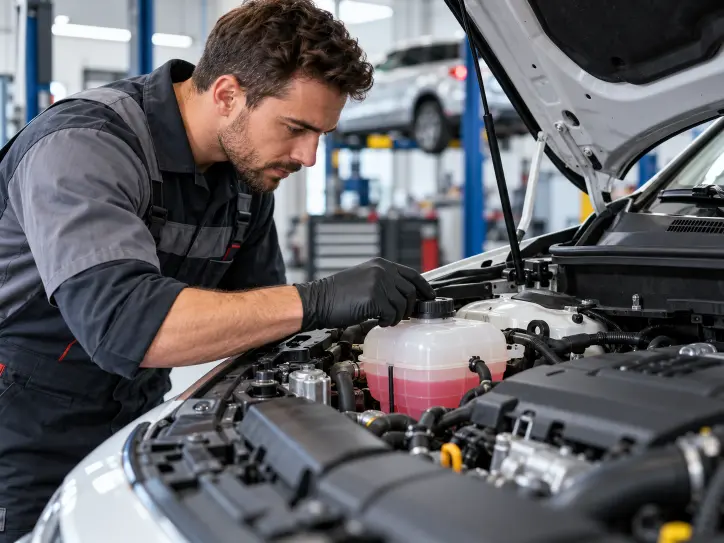
Yes. Low coolant is one of the most common reasons a car heater stops working properly.
Your heater depends on hot coolant moving through the engine and heater core. The blower fan then pushes air across the heater core and into the cabin.
If the coolant level is low, there may not be enough hot coolant reaching the heater core. That can cause weak heat, inconsistent heat or cold air from the vents.
Possible signs of low coolant include:
- weak cabin heat;
- heat that comes and goes;
- a sweet smell inside or outside the vehicle;
- coolant under the vehicle;
- the temperature gauge rising;
- a low-coolant warning light;
- gurgling sounds behind the dashboard;
- overheating.
Low coolant should not simply be topped up without checking why it is low. The system may have a leak.
Leaks can come from:
- hoses;
- the radiator;
- the water pump;
- the thermostat housing;
- the heater core;
- coolant connections;
- the coolant reservoir;
- other cooling-system components.
If your coolant level keeps dropping, schedule vehicle maintenance service in Hamilton before the problem gets worse.
Do not remove the radiator cap or coolant reservoir cap when the engine is hot. The cooling system can be under pressure and hot coolant can cause serious burns.
Thermostat Problems Can Cause Weak Heat
The thermostat helps control engine temperature by regulating coolant flow.
When the engine is cold, the thermostat stays closed so the engine can warm up. Once the engine reaches operating temperature, the thermostat opens and allows coolant to circulate through the radiator.
If the thermostat gets stuck open, the engine may take too long to warm up. That can reduce the amount of heat available for the cabin.
Signs of a thermostat problem may include:
- weak heat in cold weather;
- the temperature gauge staying low;
- the engine taking a long time to warm up;
- reduced fuel efficiency;
- heat improving slightly during city driving but staying weak on the highway.
If the thermostat gets stuck closed, the opposite problem can happen: the engine may overheat because coolant cannot circulate properly.
An overheating engine is urgent. If the temperature gauge rises into the danger zone or a warning light appears, stop safely and arrange service.
A thermostat is not always difficult to replace, but the symptoms should be properly checked first. Low coolant, air in the system or sensor issues can sometimes create similar signs.
Heater Core Issues Can Reduce Heat
The heater core is a small heat exchanger inside the dashboard. Hot coolant passes through it, and the blower motor pushes air across it to warm the cabin.
If the heater core is clogged, leaking or restricted, the vehicle may not produce enough heat.
Possible signs of a heater core issue include:
- weak heat from the vents;
- cold air even when the engine is warm;
- a sweet smell inside the cabin;
- foggy windows that are hard to clear;
- coolant loss;
- damp carpet near the dashboard;
- oily film on the inside of the windshield;
- heat that works on one side but not as expected overall.
A clogged heater core can prevent hot coolant from flowing through properly. A leaking heater core can allow coolant to escape into the cabin area.
Because the heater core is usually located behind the dashboard, diagnosis matters. It is not a part that should be replaced based on guesswork.
The technician may check coolant level, coolant condition, hose temperature, system pressure and signs of leakage before recommending the next step.

Blower Motor or Cabin Air Filter Problems Can Restrict Airflow
Sometimes the heater is producing warm air, but not enough air is reaching the cabin.
In that case, the issue may involve airflow rather than heat production.
Clogged cabin air filter
The cabin air filter removes dust, pollen and debris from air entering the cabin. Over time, it can become clogged.
A dirty cabin filter can cause:
- weak airflow from the vents;
- more fan noise than usual;
- poor defrost performance;
- unpleasant odours;
- slower window clearing;
- reduced heating and A/C performance.
Replacing a clogged filter may improve airflow, but it will not fix low coolant, a thermostat problem or a heater core issue.
Blower motor problems
The blower motor pushes air through the vents.
A blower motor or related electrical issue may cause:
- no airflow;
- airflow only at certain fan speeds;
- intermittent airflow;
- squealing or rattling sounds;
- weak air movement;
- the fan stopping suddenly.
The blower resistor, relay, fuse, wiring or control module may also be involved.
If the air is hot but barely comes out, airflow components should be checked as part of the diagnosis.
Blend Door or Actuator Problems Can Send the Wrong Air Temperature
Modern vehicles use doors inside the HVAC system to control where air goes and how hot or cold it feels.
One of these is commonly called a blend door. It controls how much air passes through the heater side versus the cooler side of the system.
A small electric actuator usually moves the blend door when you change the temperature setting.
If the blend door sticks or the actuator fails, you may notice:
- cold air even when heat is selected;
- heat on one side but cold air on the other;
- clicking behind the dashboard;
- temperature settings that do not respond;
- inconsistent heat;
- defrost that does not behave correctly.
This can be confusing because the engine and coolant system may be working normally, but the cabin still does not get warm.
Adding coolant or replacing the thermostat will not fix a stuck blend door. The airflow and HVAC control system must be checked.
Why Foggy Windows Can Signal a Heating or Defrost Problem
Foggy windows are common in winter, but they should clear when the defrost system is working properly.
If the windshield fogs up and stays foggy, the heating and ventilation system may not be removing moisture effectively.
Possible causes include:
- weak airflow;
- a clogged cabin air filter;
- poor heater performance;
- a malfunctioning A/C system;
- a heater core leak;
- water inside the cabin;
- blocked vents;
- recirculation mode used too often;
- poor defrost door operation.
Many drivers do not realize that the A/C system can help defog windows, even in colder weather. Air conditioning removes moisture from the air. When combined with heat, it helps clear glass more effectively.
That is why a defrost problem may involve both the heating and A/C sides of the system.
If your vehicle also has trouble with warm-weather cooling, review our guide on why your car A/C blows warm air. Heating, cooling and defrost performance are often connected through the same HVAC system.
Is It Safe to Drive Without Proper Heat?
It depends on the symptoms.
If the vehicle has weak cabin heat but no warning lights, no overheating and clear visibility, you may still be able to drive for a short time. However, the problem should be inspected before winter conditions get worse.
Do not ignore heater issues when they are connected to:
- engine overheating;
- low coolant;
- coolant leaks;
- warning lights;
- foggy windows that will not clear;
- sweet smell inside the cabin;
- smoke or steam;
- wet carpet;
- sudden loss of heat.
Poor defrost performance can make the vehicle unsafe because it affects visibility. If you cannot keep the windshield clear, do not continue driving as normal.
If the engine temperature rises or the vehicle overheats, stop safely and arrange professional help. Continuing to drive an overheating vehicle can cause serious engine damage.
CRS Automotive provides automotive repair services in Hamilton when the issue involves more than the HVAC system alone.
When Should You Book a Heating System Inspection?
Book an inspection before winter driving becomes difficult if you notice:
- the heater blows cold air;
- the cabin takes too long to warm up;
- heat works only while driving;
- heat disappears at idle;
- the temperature gauge behaves unusually;
- coolant level keeps dropping;
- the defroster does not clear the windshield;
- one side of the cabin is warm and the other is cold;
- the fan works only on some settings;
- there is a sweet smell inside the vehicle;
- the windows fog up repeatedly;
- the vehicle recently overheated.
Try not to wait until the coldest week of the season. By then, appointments can be harder to schedule, and the issue may already be affecting visibility or drivability.
A proper inspection may include:
- checking coolant level and condition;
- inspecting for leaks;
- checking thermostat operation;
- testing heater output;
- comparing inlet and outlet heater-core hose temperatures;
- checking blower motor operation;
- inspecting the cabin air filter;
- testing blend door and actuator function;
- scanning for HVAC-related fault codes;
- checking defrost performance.
Once the cause is identified, the technician can explain whether the vehicle needs a simple maintenance item, a cooling-system repair or a heating-system repair.
Book A/C and Heating Service in Hamilton
If your car heater is not working properly in winter, do not wait until the cabin is freezing or the windshield will not clear.
CRS Automotive can inspect the heating, cooling and ventilation system to determine why the vehicle is not producing proper heat.
Book A/C and heating service in Hamilton before the coldest winter weather arrives, or contact CRS Automotive to describe the symptoms you are experiencing.
The CRS Automotive service centre is located at 999 King Street East in Hamilton.
Frequently Asked Questions
Why is my car heater blowing cold air?
A car heater may blow cold air because of low coolant, air in the cooling system, a stuck thermostat, a clogged heater core, a blend door problem or an HVAC control issue. The cooling system and heater system should be inspected together.
Why does my heater work only when I am driving?
Heat that improves while driving but becomes weak at idle may point to low coolant, poor coolant circulation, air in the system or another cooling-system issue. The exact cause should be tested before parts are replaced.
Can low coolant cause no heat in a car?
Yes. If there is not enough coolant reaching the heater core, the cabin may not receive proper heat. Low coolant can also indicate a leak, so the system should be inspected rather than simply topped up repeatedly.
Why do my windows keep fogging up in winter?
Foggy windows may be caused by weak heat, poor airflow, a clogged cabin filter, excess moisture inside the vehicle, a heater core leak or poor defrost operation. Since A/C helps remove moisture from the air, a defrost issue can also involve the A/C system.
Should I drive if my car is overheating and the heater does not work?
No. If the vehicle is overheating, stop safely and arrange service. Driving an overheating vehicle can cause serious engine damage.