
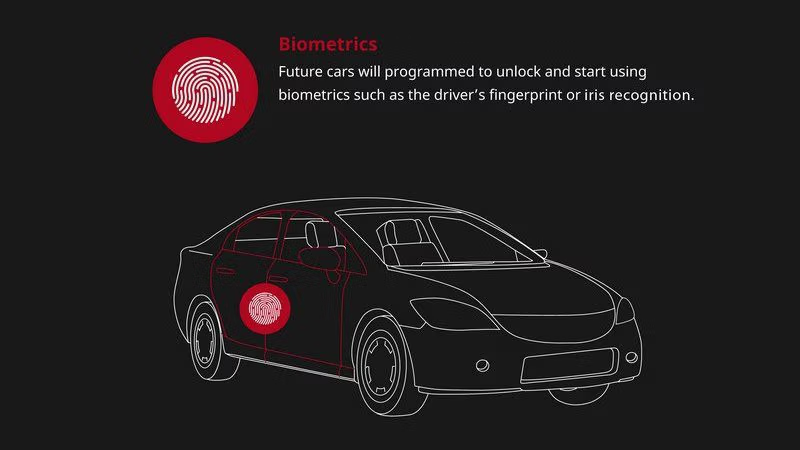
 You may have heard that there are already cars that can only be unlocked with the driver’s fingerprints, much like smartphones. But, that is not all. To further “improve” people’s driving skills, a number of automakers have announced introducing biometric sensors – to monitor the driver’s vitals while driving. The USC Center for Body Computing experts, whose focus is on the digital health and innovation, are already examining the benefits and risks of moving on to this next phase in car design and technology, pointing out that a technology such as this could be used for air quality detection, heart rate and attention monitoring.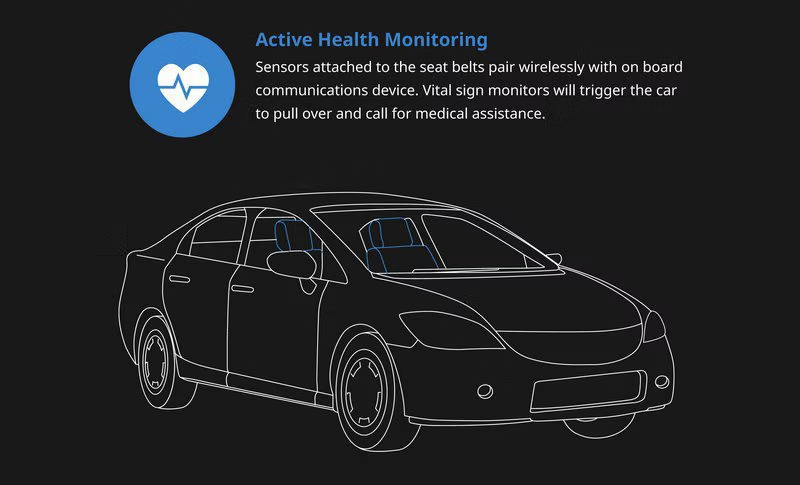
“What is contrary to the current practice of visiting a doctor only when you get sick, you are actually able to collect data for a certain period, which will give you a better picture of the situation,” says Joe Perez from USC. “The idea is that you will be given the opportunity to collect the data in real time, which would be stored in a secure online service and then further analyzed.”With built-in biometric sensors and artificial intelligence technology, the car can propel the driver to a much healthier behavioral pattern.
“Imagine driving home, and navigation gives you the signal to go to the gym or, for example, enter McDonald’s in the search, and the system will guide you to healthier options,” explains Sohel Merchant from Evelozcity.Sensors for monitoring the health of users can already be found in many conceptual vehicles of traditional manufacturers and startup companies. However, there is a concern that information could be misused by insurance companies and healthcare companies as well as hackers, which experts say is crucial.
Peter Morgan from Clever Security says: “Now that cars have access to the Internet, wireless and bluetooth technology as well as phone options, this opens up a new space for attackers, and the rest of the program code for managing the car is not fully designed to respond adequately.”Security experts have already proven that cars can be hacked, which is largely due to the fact that modern cars are powered by smaller computer systems.
“I can say with certainty that there is no invulnerable automotive system,” adds Morgan.Security experts warn companies struggling for prestige in the field of biosensors not to underestimate security when it comes to personal information. After all, in case of a security breach, that is what drivers will focus the most on regardless of how comfortable their driving experience has been up to that point.So, prepare for the future of cars with biometric sensors and we will do it together with you. Visit CRS Automotive today!We are located only 3 min driving South West of Little Rays Reptile Zoo and Nature Centre and 4 min driving South West of Hamilton Indoor Go Karts.
Frequently Asked Questions
What are biometric sensors in cars and how do they work?
Biometric sensors in cars monitor physiological data from the driver, such as heart rate, fatigue indicators, or fingerprints for access. These sensors collect real-time signals and feed them to onboard systems or cloud services that analyze the data to trigger alerts, adjust vehicle settings, or enable/disable features based on the driver’s state.
What potential safety benefits do biometric sensors offer?
Biometric sensors can enhance safety by detecting driver impairment or fatigue and prompting warnings, adjusting cabin conditions to improve alertness, or enabling emergency responses if critical health events are detected. They can also support advanced driver-assistance systems by providing context about driver readiness.
What privacy and security risks are associated with in-car biometric data?
Biometric data is sensitive and could be misused if not properly protected. Risks include unauthorized access, data breaches, and improper sharing with insurers or third parties. Secure storage, encrypted transmission, strict access controls, and transparent data policies are essential to mitigate these risks.
Will biometric sensors affect vehicle repair or maintenance at CRS Automotive?
Vehicles equipped with biometric systems may require specialized diagnostics or software updates in addition to standard mechanical service. CRS Automotive provides diagnostics and electrical system services and can assess related components, but any firmware or manufacturer-specific updates may depend on the vehicle maker’s procedures.
Are biometric systems vulnerable to hacking and how can that be reduced?
Connected vehicle systems, including biometric features, increase attack surfaces and have been shown to be vulnerable if not designed with security in mind. Reducing risk involves regular software updates, strong encryption, network segmentation, and adherence to manufacturer and cybersecurity best practices during installation and maintenance.