The fluid levels you need to monitor in your car, and why.
Regularly checking your car’s fluid levels is a simple exercise that can save you a lot of money and frustration in the long-run. A car’s engine is a complex system that relies on a specific set of conditions to run optimally, and the fluid levels inside your car’s engine help regulate these conditions. Some fluids are responsible for temperature control; some provide lubrication, and some even help control your vehicle. Here are some of the systems that rely on fluids and how you can monitor those fluid levels:Engine oil
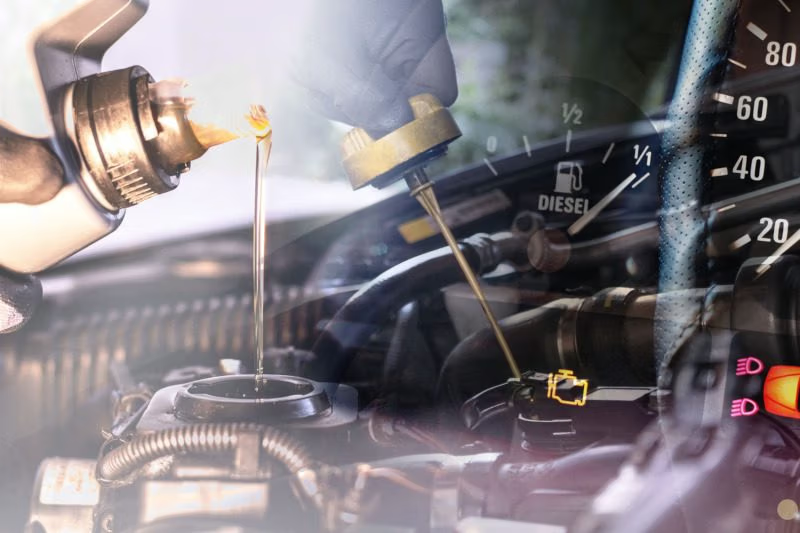
Most cars have mechanical engines with thousands of moving parts. The oil in your car’s engine keeps these parts from sticking, grinding and malfunctioning. If your car’s engine oil runs low, it can cause severe damage to your vehicle. We recommend that you check your car’s engine oil once a month to pick up any issues without delay. You can check your car’s engine oil by locating the oil dipstick inside the engine bay, if it has one. Some newer vehicles do not come with a dipstick and must be checked through the onboard computer. Also make sure that the engine is turned off and has been sitting for at least 15min before checking the level with the dipstick. Remove the dipstick, wipe it clean, and reinsert it to check the oil level. If the markings on the dipstick show that the level is low, top up the oil immediately. Take note of the oil’s appearance. You may need to drain and replace the oil if the oil is very dark. If the oil is gritty, you need to book your car in for a service without delay because particles in the oil could mean that a component in the engine is breaking down. If the oil is milky in appearance, you might have coolant leaking into the engine, and you should speak to a service advisor at CRS Automotive about getting it fixed. Even when you know how to check the oil fluid level in the engine, it is crucial to change the car’s oil regularly. How frequently depends on how often you drive, what conditions you drive in, and the type of vehicle you own. At CRS Automotive Hamilton, we not only check fluid levels and replace the engine oil when necessary, but we also inspect the following:- Oil filter
- Air filter
- Transmission filter
- Vehicle lubrication
- Engine coolant
- Antifreeze coolant.
Brake fluid
Modern cars use a hydraulic system for braking, which means that brake fluid levels are crucial to keeping your vehicle safe to operate. When you hit the brakes, the pedal compresses the fluid inside the system, pushing the fluid into the brake lines that activate the brake pads. We recommend getting your brake fluid checked at your annual service, but if you feel any change in your brakes, you can inspect your brake fluid levels to see if you need a top-up. Locate the brake fluid tank inside the engine bay and note the fluid level. If the level is too low, you can top it up. If the fluid is not translucent, you will need to replace it to ensure no water in the brake system can cause rust and corrosion. Brake fluid and brakes are like ketchup and chips, made for each other. Your top priority should always be keeping your loved ones safe, which is what CRS Automotive Hamilton believes as well. Now that you know how to measure the brake fluid level let us find out how you will know the brakes need replacing.- There is a screeching noise when your car comes to a quick stop
- The vehicle pulls to one side
- There is a grinding sensation when you slow down or speed up.
Engine coolant
Your car’s engine runs on combustion, which means there will be a lot of heat inside the engine when it is running correctly. The engine temperature is regulated through the engine coolant, which traps heat from the engine and releases it through the radiator. If the coolant level is low, your engine may overheat and get damaged. We recommend checking the engine coolant level every 50 000 kilometers or whenever the coolant light goes on. If the coolant light does appear, immediately pull your car over and wait for the engine to cool down before checking the coolant level. Locate the coolant tank inside the engine bay and check that the fluid level is between the maximum and minimum. If your car doesn’t have a coolant tank, you can check the coolant level by unscrewing the radiator cap and ensuring it is filled to the top. It is essential to perform this check when the engine is cold because these fluids can spray and cause severe burns if the engine is still hot.Steering Fluid
The power steering system in modern cars is similar to the brake system in that they use hydraulic technology. To keep the steering functioning correctly, you must keep your steering fluid levels up. We recommend checking steering fluid levels with your annual service or whenever you feel that the steering is becoming more difficult. The steering fluid tank should also be located in the engine bay. Look at the fluid level and top it up if there is not enough fluid in the tank. If you find yourself topping the steering fluid up frequently, you should book a service with CRS Automotive to determine if there is a leak in the steering system. Always refer to the owner’s manual to find out what type of steering fluid to use, as there are three types:- Automatic transmission fluid (ATF)
- Synthetic power steering fluid is used in most newer vehicles and is specifically engineered for the car
- Non-synthetic, mineral power steering fluid.
Windshield washer fluid
Don’t neglect the windshield washer fluid when you are doing maintenance on your car. The windshield washers keep your view unobstructed and will keep you driving safely in rainy or snowy conditions. We recommend checking your windshield washer fluid a few times a year, especially after it has been raining or snowing and you have been using the washers more regularly. Locate the windshield washer fluid tank in the engine bay to check the level. If the fluid is running low, you can top it up with fluid from a gas station or make your own with a bit of liquid dish soap and water. Now that you know how to check the windshield washer fluid find out if your windshield wipers need replacing. Even the best washer fluid will be ineffective when the wipers are worn. Since temperature extremes damage windshield wipers by splitting and cracking the rubber blades, replace them at least after the winter and summer. During the car fluid check, lift up the wiper blades and rub your finger along the rubber to feel for frayed, split or cracked areas. What do new and unworn blades look like? It should have a straight and clean edge that slides evenly across the windshield glass without leaving streaks. Another sign that wipers need replacement are a scraping noise when the blade moves across the windshield.Transmission fluid
The transmission fluid in your car’s engine works to keep the components in your car’s transmission system cool and lubricated. Whether your vehicle has a manual or automatic transmission, the gears and parts need to move unhindered to keep your vehicle running. We recommend having the transmission fluid checked at your annual service as most cars don’t need fluid to be replaced often (or at all), but if something goes wrong in the transmission, you will end up paying dearly for the problem. If your car has a transmission fluid tank, you can check the fluid level by using the dipstick. Some vehicles, however, need to be checked by a professional. If you feel any sticking or grinding in the transmission, make an appointment with our service professionals at CRS Automotive immediately to avoid severe damage.Be sure to only use the fluids for each system that is recommended by your car’s manufacturer. If you don’t know which fluids are best for your vehicle, feel free to reach out to CRS Automotive in Hamilton, Canada, for your next car service or for help with topping up your car’s fluid levels.We are located only 7 min driving West of The Centre on Barton Shopping Mall and 11 min South East of Hamilton General Hospital.Frequently Asked Questions
How often should I check my engine oil?
Check engine oil at least once a month. For vehicles with a dipstick: with the engine off and cooled for about 15 minutes, remove, wipe, reinsert and read the dipstick. Top up if below the recommended mark and note oil appearance—very dark, gritty or milky oil can indicate problems that need service at CRS Automotive.
When should I have my brake fluid inspected or replaced?
Have brake fluid checked at your annual service or immediately if you notice brake changes (screeching, pulling to one side, grinding). If the brake fluid is discolored or not translucent, it should be replaced to prevent contamination, corrosion and loss of braking performance.
How do I check coolant level and what precautions should I take?
Check the coolant reservoir level when the engine is cold—fluid should be between the minimum and maximum marks. If there’s no reservoir, only open the radiator cap once the engine is fully cooled. Low coolant can cause overheating; if the coolant warning light appears, stop safely and consult CRS Automotive.
What should I do if my power steering feels difficult or noisy?
Check the power steering fluid reservoir and top up with the manufacturer-specified fluid if low. Frequent topping up or persistent steering difficulty/noise suggests a leak or component issue—book a diagnostic at CRS Automotive to locate and repair the problem.
How often should I top up windshield washer fluid and inspect wiper blades?
Check windshield washer fluid several times a year, especially after heavy use in rain or snow, and top up as needed. Inspect wiper blades seasonally—replace them if the rubber is frayed, cracked or leaves streaks, as worn blades reduce visibility and washer fluid effectiveness.