Your brakes are one of the most important safety systems in your vehicle, but brake problems do not always appear suddenly. In many cases, the system provides warning signs before braking performance becomes seriously affected.
You may hear a squealing or grinding noise, feel a vibration through the pedal, notice that the vehicle pulls to one side or find that stopping takes longer than it used to. Some symptoms can be caused by normal wear, while others may indicate a hydraulic, mechanical or electronic problem that requires prompt attention.
If something feels or sounds different when you slow down, professional brake repair in Hamilton can identify the cause and determine which parts need service.
Understanding the warning signs can help you arrange an inspection before a smaller concern becomes a more expensive repair or a serious safety problem.
Common Warning Signs Your Brakes Need Attention
Brake wear develops differently depending on the vehicle, the components installed and how the vehicle is driven. There is no single mileage interval that tells every driver exactly when the brakes must be replaced.
Instead, pay attention to changes in how your vehicle sounds, feels and responds.
Common signs that your brakes should be inspected include:
- squealing, scraping or grinding noises;
- a soft, spongy or unusually hard brake pedal;
- increased stopping distance;
- vibration or pulsation while braking;
- the vehicle pulling to one side;
- a brake or ABS warning light;
- a burning smell after braking;
- the pedal travelling farther than usual;
- fluid underneath the vehicle;
- reduced braking performance;
- the parking brake no longer holding properly.
A single symptom does not always identify the exact failed component. For example, vibration may involve the brake system, but it can also be related to tires, wheels, steering or suspension.
That is why a proper inspection is more reliable than replacing parts based only on one symptom.
What Different Brake Noises Can Mean
Brake noises are among the most common reasons drivers schedule an inspection. The type of sound, when it occurs and which wheel it appears to come from can provide useful clues.
However, different problems can produce similar noises, so the sound should be treated as a warning rather than a complete diagnosis.
High-pitched squealing or screeching
Some brake pads include wear indicators designed to produce a high-pitched sound when the friction material becomes thin.
Squealing may also be caused by:
- dust or debris between braking surfaces;
- moisture or light surface rust;
- glazed brake pads;
- vibration between brake components;
- low-quality or incompatible materials;
- missing or damaged brake hardware.
A brief noise after the vehicle has been parked in damp weather may disappear after a few stops. Persistent squealing, especially when it happens every time you brake, deserves an inspection.
Grinding or scraping
Grinding is more serious than a light squeal.
It may indicate that the brake-pad friction material has worn away and a metal component is contacting the rotor. Continuing to drive in this condition can damage the rotors and reduce braking performance.
Grinding can also result from:
- debris caught near the rotor;
- damaged brake hardware;
- a seized caliper;
- severe corrosion;
- an incorrectly installed component.
If you hear a strong grinding sound when braking, limit driving and have the vehicle inspected promptly.
Clicking or clunking
Clicking or clunking may indicate that a component is moving when it should remain secure.
Possible causes include:
- loose brake hardware;
- improperly seated brake pads;
- caliper movement;
- worn suspension components;
- a loose wheel or wheel-related problem.
Because suspension and steering problems can create similar noises, the technician may need to inspect more than the brake pads and rotors.
Hissing when the pedal is pressed
A hissing sound near the brake pedal can sometimes involve the brake booster or a related vacuum component.
You may also notice that the pedal becomes harder to press or that more effort is required to stop the vehicle.
A hissing sound does not automatically mean the booster has failed, but it should be investigated if it occurs consistently or is accompanied by a change in pedal feel.
Why Does My Brake Pedal Feel Soft, Spongy or Hard?
The way the pedal feels can provide important information about the condition of the braking system.
Do not ignore a sudden change in pedal pressure, pedal height or the amount of travel required before the vehicle begins slowing down.
A soft or spongy brake pedal
A soft or spongy pedal may feel as though it compresses gradually rather than providing firm resistance.
Possible causes include:
- air in the hydraulic system;
- low brake fluid;
- a brake-fluid leak;
- deteriorated brake hoses;
- a master-cylinder problem;
- overheated or contaminated brake fluid;
- an issue with another hydraulic component.
A pedal that slowly sinks while you maintain steady pressure may indicate a hydraulic concern and should be inspected immediately.
Low fluid should not simply be topped up without determining why the level dropped. Brake-fluid loss may indicate worn components or a leak that requires repair.
A pedal that travels too far
If the pedal moves closer to the floor than it used to, the braking system may need adjustment, repair or hydraulic service.
Excessive pedal travel can be associated with:
- worn pads or shoes;
- air in the brake lines;
- low fluid;
- an internal or external leak;
- rear brake adjustment problems on some vehicles;
- a master-cylinder concern.
If the pedal reaches or nearly reaches the floor, do not continue driving the vehicle normally. Arrange for it to be inspected or transported safely.
A hard brake pedal
A brake pedal that is unusually difficult to press may involve the power-assist system.
Possible causes include:
- a brake-booster problem;
- a damaged vacuum hose;
- insufficient engine vacuum;
- an electric assist-system fault;
- a hydraulic restriction;
- a mechanical obstruction.
The brakes may still respond, but the vehicle can require significantly more effort to stop. This should be inspected before normal driving continues.
Why Does My Car Pull to One Side When Braking?
A vehicle should slow down in a stable and predictable manner. If it pulls left or right while braking, one side of the vehicle may be producing more braking force than the other.
Possible causes include:
- a sticking or seized brake caliper;
- uneven brake-pad wear;
- a restricted brake hose;
- contaminated brake friction material;
- uneven rotor condition;
- a hydraulic problem;
- tire-pressure differences;
- tire or alignment issues;
- worn suspension or steering components.
The direction of the pull does not always identify the damaged side. For example, one wheel may not be braking properly, causing the vehicle to move toward the wheel that is providing more braking force.
Pulling can also occur without the brakes being applied. If the vehicle drifts during normal driving and becomes more noticeable during braking, the problem may involve alignment, tires or suspension.
In that situation, a combined brake and suspension inspection in Hamilton may be necessary to identify the source accurately.
Do not compensate for pulling by holding the steering wheel more firmly. The underlying issue can affect control, tire wear and stopping stability.
Why Does the Steering Wheel or Brake Pedal Vibrate?
A pulsating pedal or shaking steering wheel during braking is commonly associated with inconsistent contact between braking surfaces.
Drivers often describe this as:
- pulsing through the brake pedal;
- shaking through the steering wheel;
- vibration through the seat or floor;
- a repeated grabbing and releasing sensation;
- stronger vibration when braking from higher speeds.
Possible causes include:
- rotor thickness variation;
- excessive rotor runout;
- uneven brake-pad deposits;
- overheated braking components;
- a sticking caliper;
- worn suspension parts;
- loose wheel components;
- tire or wheel imbalance.
The location of the vibration may offer clues. Steering-wheel vibration can be more noticeable when the issue involves the front of the vehicle, while vibration through the seat may involve the rear. However, this is not a reliable diagnosis on its own.
A technician may inspect the pads, rotors, calipers, wheel bearings, tires and suspension before recommending repairs.
Replacing brake rotors without checking the related components may allow the problem to return.
Why Is My Vehicle Taking Longer to Stop?
Drivers often become accustomed to gradual changes in braking performance. A stopping-distance problem may therefore develop without being immediately obvious.
You may notice that:
- you need to press the pedal earlier;
- the pedal requires more force;
- the vehicle does not respond as quickly;
- braking feels weak on hills;
- the vehicle feels less controlled during sudden stops;
- braking performance changes after repeated stops.
Reduced braking performance can be caused by:
- worn brake pads;
- overheated brakes;
- glazed friction material;
- contaminated pads or rotors;
- hydraulic problems;
- low or degraded brake fluid;
- a brake-booster issue;
- tire problems;
- poor road conditions.
Your tires also affect how effectively the vehicle can stop. Even a properly functioning brake system cannot provide its best performance if the tires have inadequate tread, incorrect pressure or poor traction.
If stopping performance has changed, avoid testing the vehicle with aggressive stops on public roads. Arrange a controlled inspection instead.
What Does a Burning Smell After Braking Mean?
A strong chemical or burning smell after driving may indicate excessive heat around one or more brakes.
This can happen after heavy braking, but it may also point to a mechanical problem.
Possible causes include:
- a seized or sticking caliper;
- a parking brake that did not release fully;
- repeated hard braking;
- riding the brake pedal;
- overheating pads or rotors;
- contaminated friction material;
- a wheel bearing or nearby component generating heat.
You may also notice:
- smoke near a wheel;
- one wheel feeling significantly hotter than the others;
- reduced acceleration;
- the vehicle pulling;
- poor fuel economy;
- a soft pedal after repeated braking.
Do not touch the wheel, rotor or caliper directly. Brake components can become hot enough to cause serious burns.
If smoke is visible, the smell is strong or the vehicle is difficult to move, stop in a safe location and arrange professional assistance.
Can You Keep Driving If the Brake Warning Light Comes On?
The correct response depends on which light is illuminated and whether the vehicle has any other symptoms.
The red brake warning light may indicate:
- the parking brake is engaged;
- the brake-fluid level is low;
- a hydraulic pressure problem;
- another fault detected by the braking system.
The amber ABS light indicates a problem with the anti-lock braking system. Conventional braking may remain available, but the anti-lock function may not operate correctly during emergency braking or on slippery surfaces.
Some vehicles also display warnings related to:
- electronic stability control;
- automatic emergency braking;
- brake-pad wear;
- electronic parking brakes;
- brake assist.
First, confirm that the parking brake has been released fully. If the warning remains on, consult the owner’s manual and arrange an inspection.
Stop driving and seek assistance if a brake warning appears together with:
- a soft pedal;
- a pedal that reaches the floor;
- reduced stopping ability;
- fluid loss;
- grinding;
- smoke;
- strong pulling;
- unusual mechanical noises.
Brake warning indicators are designed to alert the driver to conditions that may affect the braking system. They should not be cleared or ignored without identifying the cause.
Why Hamilton Driving Conditions Can Wear Brakes Faster
Brake wear depends heavily on how and where a vehicle is driven.
Hamilton drivers regularly encounter a combination of conditions that can place additional demands on braking components.
Stop-and-go traffic
Frequent braking in city traffic generates more heat and wear than steady highway driving.
Short trips can involve repeated acceleration and braking without long periods for the components to cool.
Hills and escarpment routes
Driving down a long or steep grade requires the brakes to manage additional heat.
Holding the pedal continuously on a descent can contribute to overheating. Drivers should follow the vehicle manufacturer’s guidance for selecting an appropriate gear and controlling speed on hills.
Winter moisture and road salt
Moisture and road salt can contribute to corrosion on:
- brake rotors;
- calipers;
- brackets;
- brake lines;
- parking-brake components;
- brake hardware.
Light surface rust on a rotor may clear during normal braking. More severe corrosion can restrict component movement or create uneven braking surfaces.
Seasonal temperature changes
Freeze-thaw cycles, moisture and periods when a vehicle sits unused can affect brake components.
A vehicle that is driven infrequently may still develop corrosion even if it has accumulated relatively few kilometres.
Potholes and rough roads
Potholes do not normally wear brake pads directly, but an impact can affect tires, wheels, steering and suspension.
These problems can create pulling or vibration that may initially feel like a brake concern. CRS Automotive provides broader automotive repair services in Hamilton when the symptoms involve more than one vehicle system.
How Often Should Your Brakes Be Inspected?
There is no universal brake-replacement interval for every vehicle.
Brake life depends on factors such as:
- vehicle weight;
- pad and rotor materials;
- driving habits;
- city versus highway use;
- towing or carrying heavy loads;
- hills;
- weather;
- corrosion;
- regenerative braking on hybrid and electric vehicles.
Follow the inspection and maintenance intervals in your owner’s manual.
It is also practical to have the brakes inspected during:
- seasonal tire changes;
- regular vehicle maintenance;
- wheel or tire service;
- preparation for a long trip;
- any visit prompted by a new brake symptom.
Routine vehicle maintenance in Hamilton provides an opportunity to identify uneven wear, corrosion or fluid concerns before they become more noticeable.
An inspection does not automatically mean every component must be replaced. It should determine the condition of the system and explain which work is required now, which work may be needed later and which parts remain serviceable.
What Is Checked During a Brake Inspection?
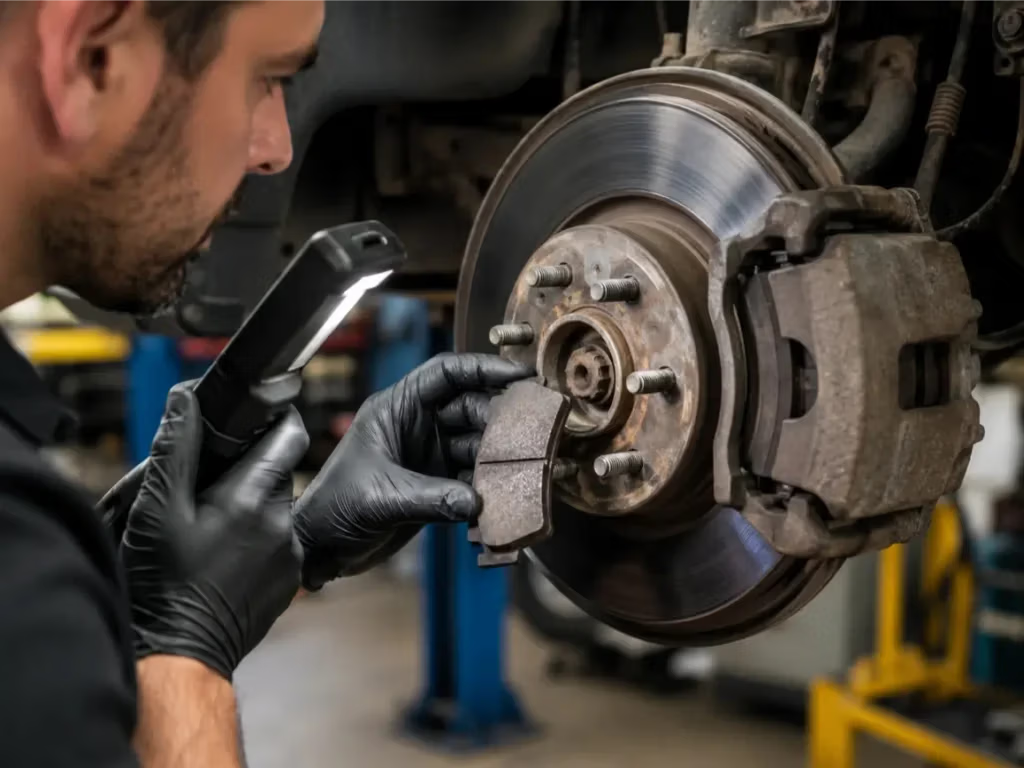
The exact procedure depends on the vehicle and symptoms, but a brake inspection may include:
- measuring front and rear brake-pad thickness;
- inspecting rotors or drums;
- checking caliper operation;
- examining brake hoses and accessible lines;
- checking the brake-fluid level and condition;
- looking for hydraulic leaks;
- testing pedal feel;
- checking the master cylinder and brake booster when necessary;
- inspecting parking-brake operation;
- examining brake hardware;
- scanning ABS or stability-control systems;
- checking tires and suspension when pulling or vibration is present;
- completing a controlled road test when safe.
The technician should consider the system as a whole rather than looking only at the friction material.
For example, installing new pads without correcting a seized caliper can lead to uneven wear and another repair. Similarly, replacing rotors without identifying excessive heat or improper component movement may not solve the original vibration.
When Should You Book a Brake Inspection?
Book an inspection as soon as you notice a change in braking performance.
Do not wait for several symptoms to appear at the same time.
Arrange service when:
- the brakes squeal consistently;
- you hear grinding or scraping;
- the pedal feels soft, low or unusually hard;
- the vehicle pulls while braking;
- the pedal or steering wheel vibrates;
- stopping takes longer;
- the brake or ABS warning light remains on;
- you smell burning near a wheel;
- the parking brake does not hold;
- brake fluid appears low;
- the vehicle has been sitting for an extended period;
- you are preparing for a long trip;
- you do not know when the brakes were last inspected.
A prompt inspection may allow worn pads to be replaced before they damage other components. More importantly, it confirms whether the vehicle is safe to continue driving.
Book Brake Repair in Hamilton With CRS Automotive
If your brakes sound different, feel different or no longer respond the way you expect, do not rely on guesswork.
CRS Automotive can inspect the braking system, identify the source of the problem and explain which repairs or maintenance services your vehicle requires.
Schedule a Hamilton brake inspection or contact CRS Automotive to describe the symptoms you have noticed.
The Hamilton service centre is located at 999 King Street East and works on light- and medium-duty vehicles and trucks.
Frequently Asked Questions
How do I know whether I need brake pads or rotors?
Brake pads and rotors must be inspected and measured. Thin pads do not automatically mean the rotors require replacement, but damaged, excessively worn or uneven rotors may also need service. The decision should be based on condition and manufacturer specifications.
How long do brake pads usually last?
Brake-pad life varies significantly by vehicle, material and driving conditions. Frequent city driving, hills, heavy loads and aggressive braking can shorten service life. Follow the vehicle manufacturer’s guidance and rely on inspections rather than one universal kilometre interval.
Is it safe to drive with squeaking brakes?
A brief squeak caused by moisture may disappear after a few stops, but persistent squealing can indicate wear, glazing, contamination or a hardware problem. Schedule an inspection if the noise continues or is accompanied by reduced braking performance.
Why does my brake pedal shake when I stop?
Pedal pulsation may be caused by rotor thickness variation, uneven pad deposits, overheating or a problem with another wheel or suspension component. An inspection is needed to identify the exact source.
Should I drive if my brake pedal goes to the floor?
No. A pedal that reaches the floor can indicate a serious hydraulic or mechanical problem. Stop in a safe location and arrange for the vehicle to be inspected or transported rather than continuing to drive normally.