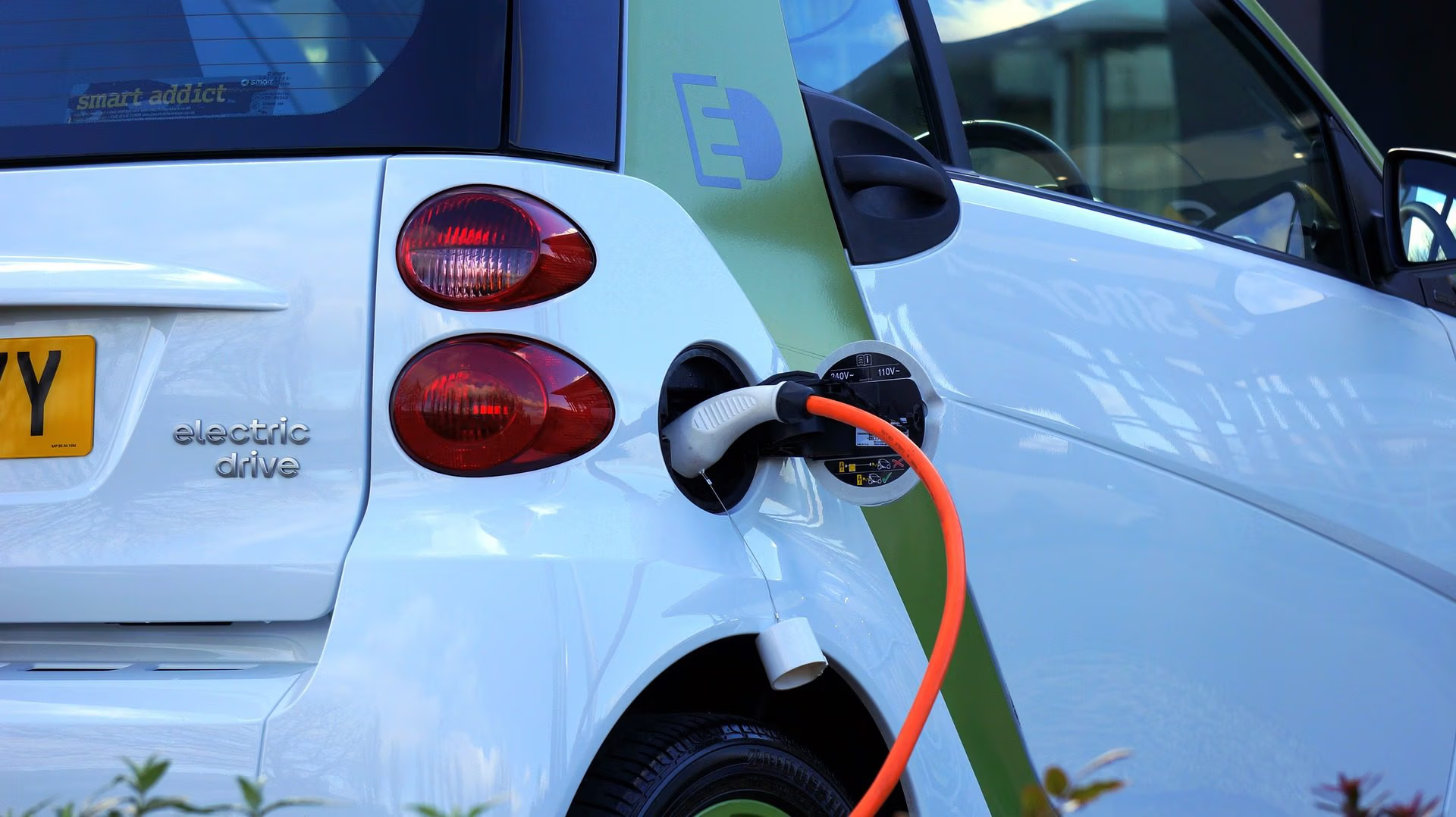
When electric vehicles first began appearing on local roads, a widespread myth suggested that these cars would never need to visit an auto repair shop. Early marketing campaigns focused heavily on a zero-maintenance ownership experience. Working as an automotive service professional in Hamilton, I see a completely different reality on our shop hoists every day. You can certainly say goodbye to engine oil changes, spark plugs, and tailpipes, but 2026 – and 2027-model-year EVs are heavy, highly complex machines. They require precise, routine technical care to remain safe and to prevent unexpected, high-cost repairs.
Monitor the battery and liquid thermal loops.
The high-voltage battery pack is the single most expensive part of any electric car. While the internal cell chemistry remains sealed at the factory, the complex infrastructure required to keep those cells stable demands regular observation. Modern vehicle platforms use advanced liquid thermal management networks featuring multi-loop paths and integrated heat pumps. These systems work constantly to protect the battery during rapid highway charging sessions and extreme Ontario winter freezes.
The low-conductivity coolant circulating through these cooling loops degrades over time. If the fluid accumulates trace moisture or loses its chemical properties, the battery can overheat, charging speeds drop significantly, or the vehicle can trigger a complete system shutdown to protect itself from damage. Flushing this specialized fluid requires distinct shop equipment and factory computer sequences. It is a world away from a simple radiator drain on an older gas car. If a battery pack fails outside of its factory warranty window, the replacement cost can run into the tens of thousands of dollars, a financial shock that I prefer to help our customers avoid entirely.
Assess the brake wear and rust buildup.
The way an electric vehicle slows down is highly efficient, but it introduces an unexpected mechanical headache. EVs rely on regenerative braking, a process in which the electric motor reverses its role to slow the vehicle and return kinetic energy to the battery pack. Because the electric motor handles most of the everyday stopping power, the physical brake pads and metal rotors rarely touch each other during normal driving conditions.
While this saves your brake linings from wearing thin, our local climate creates a serious side effect. In our wet, salty winter conditions, road grime and salt settle on the brake assemblies. Since the pads do not press firmly against the rotors often enough to scrape away surface debris, moisture sits on the metal components. The calliper slider pins seize in place, and the rotors develop deep rust pits. I frequently see electric cars come in with plenty of brake pad material left, but the entire braking system is completely ruined by corrosion. Preventing this requires an annual service in which we disassemble the callipers, scrub away rust, and lubricate the slide pins to ensure everything moves smoothly.
Check the tires for internal edge wear.
This issue catches more new electric car owners off guard than almost anything else. Electric cars are heavy. The massive battery packs bolted into the floor structure make these vehicles twenty to thirty percent heavier than traditional combustion cars, and the electric motors deliver maximum torque immediately from a dead stop. This combination places immense physical stress on the tire tread.
I often inspect vehicles where the outer tread face looks perfectly healthy at first glance, but the hidden inner edge of the tire is completely worn down to the steel cords. The heavy, continuous weight of the battery pack compresses the suspension over time, altering wheel geometry and creating negative camber. To avoid destroying an expensive set of EV-specific tires in less than a year, I recommend getting a professional wheel alignment check every six to twelve months, especially after hitting a deep Hamilton pothole or a curb. Rotating your tires according to the factory manual ensures the tread wears down evenly.
Top up specialized fluids and maintain air quality.
Beyond the battery cooling loops, your brake fluid requires regular chemical testing. Even though the mechanical brakes see less active duty, the fluid naturally absorbs moisture from the atmosphere through the flexible rubber hoses. If the moisture content rises too high, it lowers the fluid’s boiling point, creating a safety hazard during sudden hard braking. It also sparks internal corrosion inside expensive anti-lock braking actuators and electronic valves.
Windshield washer fluid is another basic but frequent requirement. Hamilton’s weather demands swapping between seasonal blends to prevent the reservoir and fluid pumps from freezing and cracking during cold snaps.
Replace the cabin air filter.
Automakers have put a massive amount of engineering into passenger cabin air quality. Many newer electric models come equipped with large, multi-stage, high-efficiency particulate air filters designed to trap road dust, allergens, and exhaust from traffic before they enter the vehicle. Because these filters catch so many fine particles, they fill up quickly. Replacing your cabin filter every 24,000 kilometres keeps the interior air clean and prevents the electric blower motor from straining and burning out prematurely.
Update the software and calibrate safety sensors.
An electric vehicle functions more like a rolling computer network. While manufacturers resolve many electronic glitches using over-the-air software updates, the physical sensors scattered across the chassis still need manual attention. Modern cars rely on arrays of radar units, cameras, and ultrasonic sensors to operate safety features.
Whenever we perform a wheel alignment or replace a worn suspension component, we must also run a digital calibration of the onboard sensors. If the mechanical track of the wheels changes but the forward-facing camera still operates on the old baseline calibration, your lane-keeping assistance and automatic emergency braking systems can behave erratically.
Maintain the body and chassis structures.
Keeping the underside of the vehicle clean is critical to preserving the structural frames that cradle the heavy battery assembly. Regular underbody washes clear away accumulated road salts that trigger metal oxidation. Taking care of the external body panels preserves the vehicle’s appearance and protects its future trade-in value when you eventually decide to upgrade.
What maintenance do hybrid vehicles need?
If you drive a hybrid or a plug-in hybrid instead of a pure electric vehicle, you operate under a completely different set of rules. These vehicles combine an electric propulsion system with a traditional internal combustion engine, meaning you inherit the maintenance demands of both.
Hybrid cars still require regular engine oil changes on a strict time or distance schedule, even if you spend most of your daily commute driving solely on electric power. The gas engine still relies on spark plugs that experience carbon fouling, an exhaust system that can rust over time, and an engine radiator cooling loop that must be maintained alongside the separate high-voltage electronics cooling system.
Our shop is ready for the transition.
The shift toward electric propulsion requires automotive shops to rewrite how they prepare their technicians completely. At CRS Automotive in Hamilton, we continually invest in high-voltage safety apparel, insulated tools, and advanced training to safely handle the unique electrical architectures of these vehicles.
Our team is fully equipped to diagnose and service the complex array of sensors found on newer cars, including torque sensors, inverter cooling modules, and battery management systems. If your local business is transitioning its operations to electric or hybrid vehicles, our commercial team offers flexible fleet care programs without restrictive contracts. You can find our repair facility at 999 King Street East in Hamilton, where we remain focused on straightforward diagnostics and dependable mechanical service for every vehicle generation.
Frequently asked questions
How often do electric cars require routine maintenance?
Most manufacturers recommend scheduling a basic maintenance inspection every 12,000 to 24,000 kilometres. During this visit, a technician will rotate the tires, check the hidden inner tread edges for uneven wear, inspect the steering linkages, test the moisture levels in the brake fluid, and clean the mechanical brake pads to prevent rust buildup.
Do electric vehicles require special tires?
Yes, electric vehicles use specific tires designed to handle their unique operating demands. Tire manufacturers build these with reinforced sidewalls to support the heavy weight of the battery pack, specialized rubber compounds to resist rapid wear from the motor’s instant torque, and internal foam layers to reduce road noise entering the quiet cabin.
Why do the tires on my electric vehicle wear out so quickly?
The combination of high vehicle mass and instant torque from the electric motor puts immense friction on the rubber tread. If you hit a pothole and knock the suspension out of alignment, the car’s weight will accelerate tire wear on the inside edge very quickly, often destroying the tire before you notice the damage from the outside.
Does the electric car battery pack require servicing?
The internal cell modules are sealed and do not require direct day-to-day intervention. However, the liquid cooling loop that keeps the battery at a safe operating temperature requires regular fluid-level inspections and periodic flushing with specific non-conductive coolants, as outlined in your owner’s manual.
Can any local auto mechanic work on an electric vehicle?
No, technicians require specialized certification to work safely on high-voltage electrical systems. Standard automotive tools are not insulated against high-voltage current, and working on these systems without the proper protective gear and diagnostic equipment creates severe safety risks. Always verify that your chosen shop employs factory-trained EV technicians.